 FREESHIP FOR ALL ORDERS FROM 100$
Over two decades after Spirited Away first captivated audiences around the world, fans are still fascinated by one of its most mysterious characters: No-Face. Recently, legendary filmmaker Hayao Miyazaki himself offered a clear explanation of what this iconic spirit represents — and it gives new meaning to one of Studio Ghibli’s most beloved films.

A Spirit Without a Self: Miyazaki’s Interpretation
In a rare and insightful comment shared by Miyazaki following a Spirited Away broadcast on Japan’s Friday Road Show, he revealed that No-Face symbolizes people who lack a true sense of self and identity — those who want to latch onto others but don’t know who they are on their own.
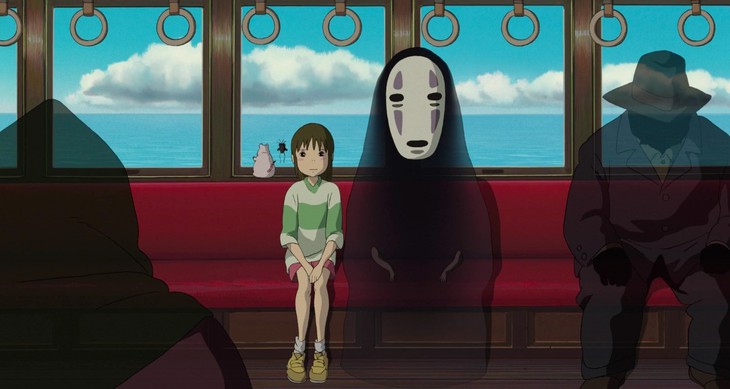
Unlike most spirits in the film that have distinct identities or roles, No-Face begins the story as almost a blank slate — quiet, silent, and featureless aside from a simple mask. Its very name (Kaonashi in Japanese, literally Faceless) reflects a lack of personal identity, reinforcing Miyazaki’s point that this spirit embodies a form of emptiness and desire for acceptance.
From Observer to Consumptive Spirit
No-Face first appears on the bridge outside the mysterious bathhouse, watching the bustling crowd and Chihiro’s entrance. At this early stage, it’s neither threatening nor harmful — simply an outsider observing from the margins.
But once brought into the bathhouse, No-Face begins to mirror its environment. It offers gold — a symbol of material wealth — to anyone willing to accept it, hoping this will earn attention and friendship. This reflects a deeper yearning for recognition from others.
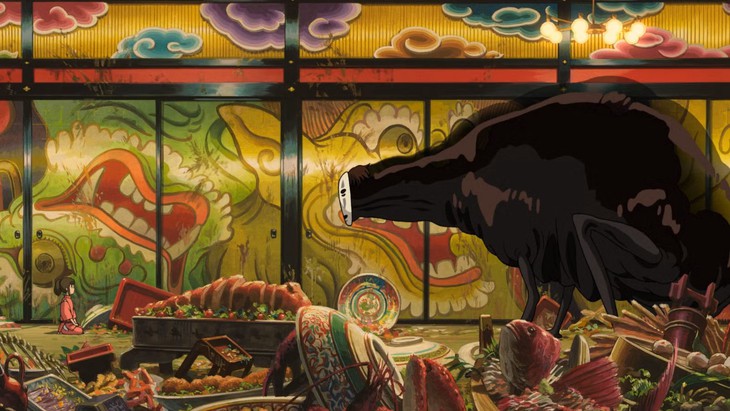
Unfortunately, the bathhouse’s atmosphere amplifies greed and excess. As No-Face consumes more — both gold and other spirits — it grows larger and more chaotic, embodying the corrupting influence of material desire and the dangers of defining oneself through external validation.
A Reflection of Society’s Desire for Acceptance
Miyazaki’s explanation — that “there are many people like No-Face in our midst” — resonates deeply because it highlights a universal human experience. Many people struggle with identity in social environments, adapting their behaviors to mimic what they believe will be rewarded by others. This can lead to a loss of self and a cycle of seeking approval through superficial means.
No-Face’s transformations in the bathhouse serve as a metaphor for this cycle. Initially unremarkable, it becomes monstrous not because it is evil, but because it absorbs the greed and attitudes around it. Its growing hunger reflects how easily someone without a strong internal sense of self can be “fed” by the desires of others — only to lose themselves in the process.
Chihiro’s Role: Kindness Over Greed
The turning point in No-Face’s arc comes not through rejection or punishment, but through Chihiro’s kindness and lack of materialism. Unlike the bathhouse workers, she resists the lure of gold and refuses to feed No-Face’s hunger for attention and wealth.
This refusal forces No-Face into a crisis, but it ultimately leads to its transformation. When Chihiro offers genuine compassion instead of fascination with its superficial offerings, No-Face begins to shed the influence of the bathhouse and its greed — even helping others and finding purpose outside of material desire.
The end of No-Face’s journey — where it finds acceptance and purpose by helping others in Zeniba’s cottage — is not just plot closure, but a symbolic shift toward self-identity and meaningful participation in community rather than hollow acceptance.
Why No-Face Still Matters Today
No-Face remains one of the most talked-about characters in Spirited Away precisely because its journey mirrors real human struggles with identity, belonging, and purpose. It captures the emotional tension between:
-
wanting acceptance but lacking a strong internal identity
-
adopting others’ values to fit in
-
the emptiness that comes from defining oneself through material offers and external validation
Miyazaki’s explanation turns what once seemed like a mysterious spirit into a poignant metaphor for modern social life, teaching that true fulfillment comes not from wealth or praise, but from authenticity and genuine connection.
More Than a Masked Spirit
Spirited Away is often celebrated for its rich animation, imaginative worldbuilding, and emotional storytelling — but Miyazaki’s clarification about No-Face adds a deeper layer of meaning. No-Face is not merely a strange spirit wandering through the bathhouse; it is a reflection of our own struggles with identity and belonging in a world that constantly shapes and reshapes us.
By refusing material temptation and offering compassion instead, Chihiro helps No-Face discover a version of itself that is rooted in meaningful action rather than empty desire. In doing so, the film offers a timeless lesson: true identity is not found in how others see us, but in how we choose to engage with the world.
Over two decades after Spirited Away first captivated audiences around the world, fans are still fascinated by one of its most mysterious characters: No-Face. Recently, legendary filmmaker Hayao Miyazaki himself offered a clear explanation of what this iconic spirit represents — and it gives new meaning to one of Studio Ghibli’s most beloved films.
👉 If you are a fan of Spirited Away, you can find and purchase merchandise inspired by the series at: spiritedawaymerch.com
